


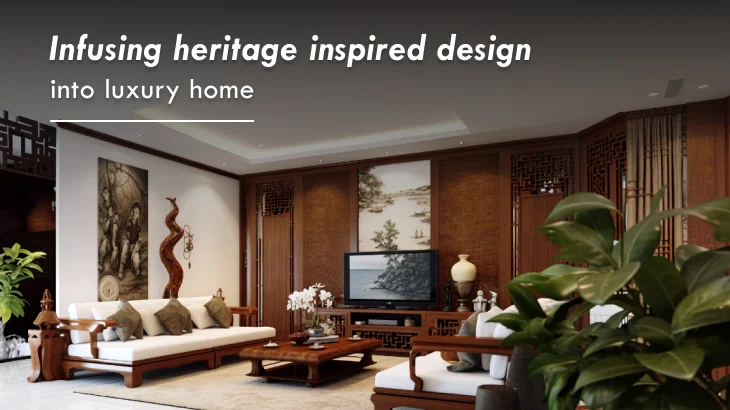
There is a particular quality of richness that no trending colour palette or imported material can manufacture: the quiet authority of design rooted in cultural heritage. Heritage-inspired interiors do not merely look beautiful. They feel inhabited, considered and deeply personal as though the home carries a story that began long before the furniture arrived.
In India’s premium residential market, the appetite for heritage home interior design is growing with real conviction. India’s home décor market, projected to reach USD 42.36 billion by 2034, reflects a consumer base that is investing in quality, cultural authenticity and spaces that endure beyond seasonal trends.
What Is Heritage-Inspired Interior Design?
So, what is heritage style in the context of modern home interiors? Heritage-inspired design draws on the architectural traditions, craft vocabularies, and decorative languages of the past (Indian, Mughal, colonial, regional, or global) and reinterprets them within contemporary living spaces.
It is not about recreating a historical room verbatim. It is about honouring the intelligence and artistry embedded in those traditions and allowing them to coexist gracefully with modern comfort.
Best Ways to Infuse Heritage-Inspired Design into Luxury Homes
1. Traditional Artwork and Wall Décor
Art is the most immediate way to introduce cultural heritage into a contemporary interior. India’s handicrafts market, growing at a CAGR of 6.13% to reach USD 8,299.45 million by 2034, offers an extraordinary range of authentic regional traditions that translate effortlessly into luxury interiors.
Madhubani and Warli paintings work as large-format statement pieces in dining rooms or entrance hallways.
Tanjore paintings, with their distinctive gold leaf work, add ceremonial richness to study spaces and prayer rooms.
2. Wooden Furniture with Classic Craftsmanship
Wooden furniture commands a significant part by rising interest in handcrafted pieces from heritage woodworking traditions. In a luxury home, carved wooden furniture anchors it.
Sheesham or teak console tables with hand-carved motifs create a focal point in entrances and living spaces.
Inlaid cabinetry using bone or metal marquetry introduces the finesse of Mughal decorative traditions into contemporary storage.
3. Heritage-Inspired Colour Palettes
Heritage interiors are not defined by any single colour, but by a sensibility: warmth over coolness, depth over flatness, richness over restraint.
Earthy ochres, terracotta, forest green and burnt sienna draw from India’s landscape and temple colour traditions.
Deep indigo and saffron, used as accent walls or textiles, introduce royal heritage without overwhelming a room.
4. Antique Lighting and Decorative Elements
Lighting in heritage-inspired interiors is decorative before it is functional.
Rajasthani jharokha-inspired pendant lanterns in brass or copper create dramatic focal points in double-height spaces and entrances.
Glass and metal chandeliers with intricate fretwork cast layered shadows that animate walls and ceilings in the evening.
5. Traditional Textiles and Fabrics
India’s textile traditions serve as both practical materials and visual centrepieces.
Handwoven silk cushion covers and upholstered ottomans introduce colour and texture without structural commitment.
Block-printed cotton and Ajrakh textiles work beautifully as curtains and bed throws in casual-luxe schemes.
6. Arches, Patterns and Architectural Detailing
The most enduring contribution of traditional architecture to modern interiors is its geometry. It integrates seamlessly into contemporary design when applied with intention.
Pointed Mughal arches framing doorways or alcoves introduce visual drama and historical resonance simultaneously.
Geometric tile work in entrance hallways or bathrooms references centuries of Islamic and Hindu decorative tradition.
What Amenities Attract Discerning Buyers to Premium Apartments in Bangalore?
India’s luxury residential market, projected to reach USD 105 billion by 2030 at a CAGR of 15%, is being shaped by buyers who seek more than a prestigious address. They want homes that reflect their identity, their cultural values, and their personal aesthetic.
Heritage-inspired design is one of the clearest expressions of that aspiration. Buyers considering a 4 BHK flat for sale in Bangalore at Phoenix Kessaku are choosing a home with the spatial generosity, architectural quality, and interior finish to realise heritage design at its highest level.
Benefits of Heritage-Inspired Design in Luxury Homes
| Benefit | In Heritage-Inspired Homes | In Standard Modern Interiors |
| Visual Identity | Unique, culturally rooted, unrepeatable | Trend-driven, widely replicated |
| Longevity | Timeless – ages with character | Can feel dated within a decade |
| Material Quality | Artisanal, natural, heirloom-grade | Manufactured, often synthetic |
| Emotional Value | Warmth, story, cultural resonance | Functional but neutral |
| Property Premium | Strong – buyers associate with luxury | Standard – no differentiation |
Conclusion
Heritage home interior design is not a stylistic compromise between the old and the new. It is a deliberate, confident choice of drawing on India’s extraordinary depth of craft tradition, colour sensibility, and architectural vocabulary.
Whether you are looking for luxury apartments in bangalore or refining an existing space, this approach transforms a well-built apartment into a genuinely irreplaceable home. Explore Kessaku’s residences, where generous and precisely crafted spaces are the ideal canvas for heritage interiors.
FAQs
1. What is heritage-inspired interior design in luxury homes?
Heritage-inspired interior design integrates traditional artistic elements like hand-carved furniture, regional textiles, antique lighting and classical colour palettes into contemporary luxury living spaces. The result is a home that feels culturally rooted, visually distinct and resistant to passing trends.
2. How can traditional decor improve modern luxury interiors?
Traditional decor introduces warmth, texture, and narrative depth that purely contemporary interiors often lack. A single well-placed piece of artisanal craft can shift the character of an entire room, adding elegance and personal meaning simultaneously.
3. Which materials are commonly used in heritage-inspired homes?
Heritage-inspired interiors typically feature solid sheesham or teak wood, natural stone (marble, sandstone, slate), brass and bronze hardware, silk and handwoven cotton textiles, terracotta tiles and handmade ceramic vessels.
4. Why are heritage-inspired interiors becoming popular in luxury apartments?
Heritage design offers timeless appeal, authentic craftsmanship and a visual identity that cannot be easily replicated or mass-produced. Buyers are seeking homes that express cultural identity and personal taste.
5. Why are ultra-luxury apartments in Bangalore considered premium investments?
Bangalore’s luxury residential market has seen consistent capital appreciation. Apartments like Phoenix Kessaku in Rajajinagar offer architectural quality, spatial generosity, and prestige address value that support long-term investment performance.