


Table of Contents
How entry experiences shape the way we feel about where we live
We often think of homes as private spaces, personal, inward-facing, insulated from the world. But the truth is, every home tells its story long before the front door opens.
From the driveway to the drop-off, from the elevator to the corridor, every transition holds meaning. And in thoughtfully designed residences, these in-between spaces are far more than circulation paths. They are moments. Subtle cues that set the tone for what’s to come.
At Phoenix Kessaku, this philosophy is visible not in grand gestures, but in quiet decisions. The kind that elevate experience without calling attention to themselves.
Arrival as Atmosphere
In most buildings, arrival is a function, parking, security, access. In some, it becomes an experience. One that’s felt in scale, in material, in the shift from outside to in.
Phoenix Kessaku approaches arrival as an unfolding. The journey from street to lobby isn’t rushed. It’s layered. You don’t enter the building. You move into it. Through shaded landscapes, past slow water elements, under generous canopies. There’s a sense of transition, not just physical but sensory.
This kind of entry sequence doesn’t aim to impress. It aims to slow you down. Because after a city day, that’s the real luxury, the ability to pause before you step inside.
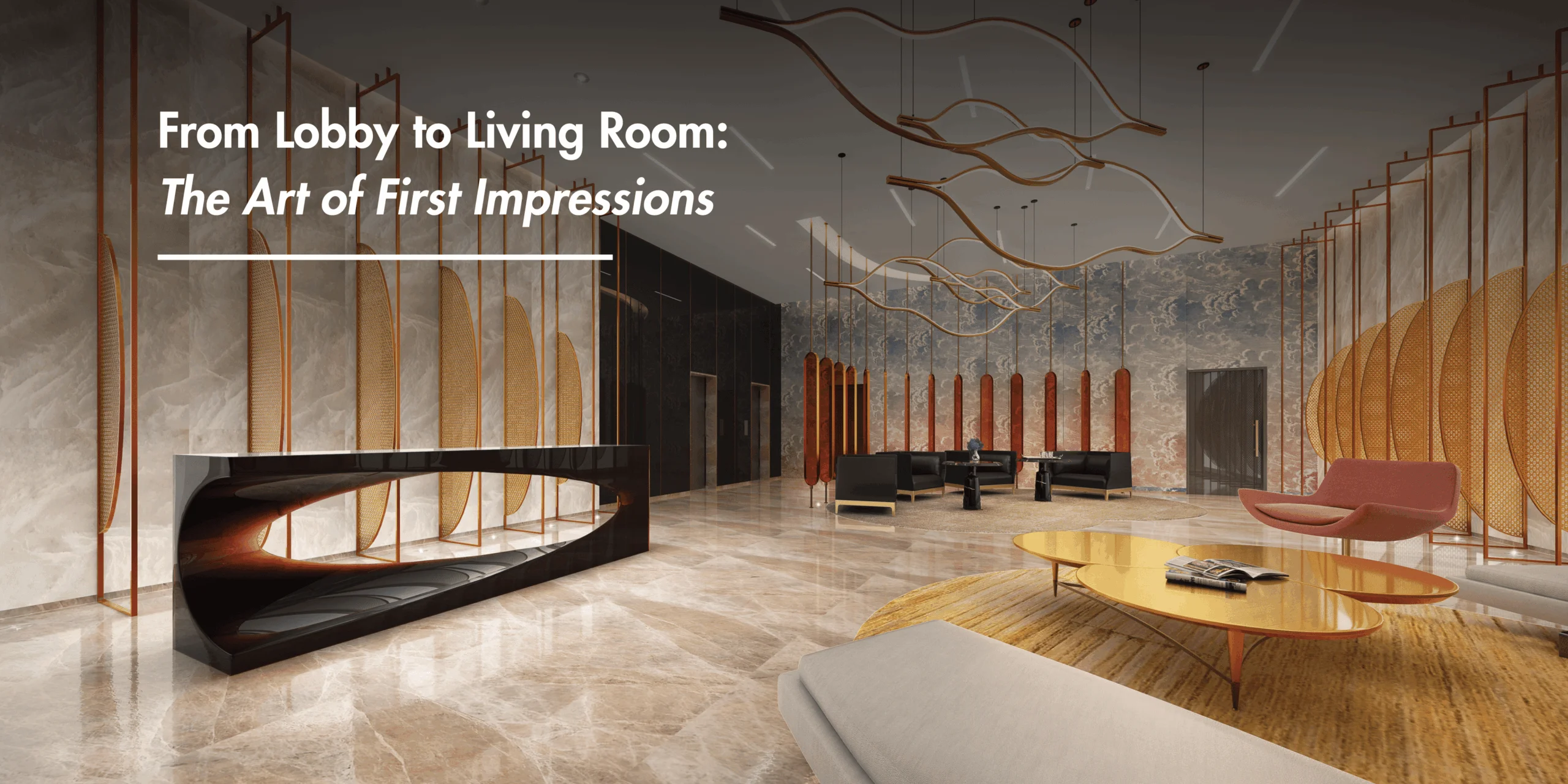
The Lobby Is a Living Space, Not a Waiting Room
In traditional apartment design, the lobby is often treated as a pass-through. A security checkpoint. A box to tick.
But at Kessaku,materials are chosen for warmth and touch. Light is controlled to soften noise and movement. The mood is not transactional. It’s tonal.
Whether you’re returning from a long day or receiving a guest, the lobby shapes how you enter the home. It sets a rhythm that continues through every step that follows.
Corridors That Don’t Feel Like Transit
We don’t often talk about the space between the elevator and your front door. But that stretch, often overlooked, plays a role in how private, personal, and protected a home feels.
Phoenix understands this. Corridors are wide, softly lit, often naturally ventilated. Elevators open into semi-private lobbies. There’s a sense of retreat, not exposure. You’re no longer in public. You’re not yet inside. You’re somewhere in between, and that pause adds emotional comfort, not just visual distance.
These are not details for show. They are details for use. The way sound carries, the way light lands, the way corners feel, it all adds up to something you notice not once, but every day.
Design as a Gesture of Welcome
Good design doesn’t need signage. It just feels right. And one of the clearest indicators of this is in how it receives you.
At Phoenix Kessaku, the idea of welcome is built into every layer of movement. From the clean geometry of the arrival court to the silence of the elevator, from the tone of materials to the temperature of light, the design speaks. Not loudly, but clearly.
It tells you this place is considered. Not curated for effect, but built with care.
Why This Matters
In the long run, the experience of home is not only defined by the big moments. It’s shaped by the everyday. The walk in. The exit out. The atmosphere when you wait for the lift. The quiet relief when the door closes behind you.
Homes that respect these moments, the small transitions, often end up offering the deepest sense of comfort. Because they meet you where you are. And they bring you back to yourself, before you’ve even stepped into your living room.
Luxury does not always announce itself. Sometimes, it shows up in how a space moves around you. Slowly. Softly. With intention. And the places that understand this will always feel like more than just an address.
They feel like dream home apartments from the moment you arrive.